
Two Recent Cases in Massachusetts Highlight the Perils of Failing to Plan when it comes to Estate Planning.

The approach of Valentine’s Day and the recent announcement by Jeff Bezos, founder of Amazon, that he and his wife are ending their marriage after 25 years, set me thinking about how divorce impacts a person’s estate plan (especially in high net worth couples). Here are five ways that divorce can impact an estate plan and actions that should be taken to address that impact on your legacy planning.
With apologies to the J. Geils Band, just because Love Stinks while you’re in the midst of a divorce, your estate plan doesn’t have to. If you are recently divorced, contact an experienced estate planning attorney to create or update your estate plan so that the people you care about don’t have to suffer the effects of your divorce again should you fall ill or pass away.
Attorney Suzanne R. Sayward is a partner with the Dedham firm of Samuel, Sayward & Baler LLC which focuses on advising its clients in the areas of estate planning, estate settlement and elder law matters. She is certified as an Elder Law Attorney by the National Elder Law Foundation, a private organization whose standards for certification are not regulated by the Commonwealth of Massachusetts. This article is not intended to provide legal advice or create or imply an attorney-client relationship. No information contained herein is a substitute for a personal consultation with an attorney. For more information visit www.ssbllc.com or call 781/461-1020.
January, 2019
© 2019 Samuel, Sayward & Baler LLC
 As an estate planning attorney, I advise clients about the ways they can pass their assets to their beneficiaries and avoid probate. This is a desirable goal for most people since probate can be expensive, time consuming, and aggravating for those you leave behind. There are multiple ways to avoid probate including: 1) owning assets jointly with another person; 2) designating pay-on-death (POD) or transfer-on-death (TOD) beneficiaries on an account; or 3) titling assets in the name of a trust. While opening a joint account and filling out a beneficiary designation form are easy, they are not the best choice in every situation. Read on for five reasons why joint ownership or a pay-on-death designation is not always the best choice if you are trying to avoid probate.
The bottom-line is that in some situations, and for some assets, joint ownership and/or pay-on-death planning is completely appropriate. However, it is important to be thoughtful about these decisions and to consider the consequences in the context of your overall estate plan. As with all estate planning, whether or not a particular type of estate planning strategy is right for you depends entirely on your unique situation. Speak with an experienced Massachusetts estate planning attorney about your situation and your goals to make sure your intentions are realized.
Attorney Suzanne R. Sayward is a partner with the Dedham firm of Samuel, Sayward & Baler LLC which focuses on advising its clients in the areas of estate planning, estate settlement and elder law matters. She is certified as an Elder Law Attorney by the National Elder Law Foundation, a private organization whose standards for certification are not regulated by the Commonwealth of Massachusetts. This article is not intended to provide legal advice or create or imply an attorney-client relationship. No information contained herein is a substitute for a personal consultation with an attorney. For more information visit www.ssbllc.com or call 781/461-1020.
December, 2018
© 2018 Samuel, Sayward & Baler LLC
Q: What is the difference between a Will and a Trust?
A: That is an excellent question and one we get from many people. Both Wills and Trusts are documents used to direct how assets will be distributed when the maker of the Will or Trust dies. However, a Trust can do so much more than a Will.
A person’s Will controls the distribution of his or her probate assets. Probate assets are bank accounts, investments, real estate, tangible personal property, and other assets which are owned in a person’s individual name and which do not have a designated beneficiary. A probate proceeding is therefore required to transfer title from the deceased to his or her heirs. For example, a bank account in someone’s individual name which does not name a beneficiary will be a probate asset when the owner passes away. A bank account which is held jointly with another person is not a probate asset when the first joint owner dies as ownership of the account passes automatically to the surviving joint owner. An IRA that names a beneficiary who is alive when the IRA owner dies is also not a probate asset as ownership passes automatically to the beneficiary.
A Trust controls the distribution of assets that are titled in the name of the Trust or which pay into the Trust when the Trust maker dies. A Trust can be a valuable asset management tool for the trust maker should he experience a period of incapacity during his or her lifetime. A Trust can be used to avoid probate when the maker of the Trust dies. This is a desirable goal since probate is usually expensive, aggravating, and time-consuming. A Trust can be used to control the distribution of a beneficiary’s inheritance. This is important if you have young beneficiaries, a beneficiary with disabilities, beneficiaries who are not responsible with money, or beneficiaries who have creditor issues or other troubles. Distributing an inheritance to a beneficiary in any of those circumstances often leads to the loss of the inheritance. A Trust can be used to protect a beneficiary’s inheritance from the beneficiary’s creditors such as a divorcing spouse, lawsuits, or bankruptcy. A Trust is an excellent vehicle for ensuring that a beneficiary with disabilities does not lose valuable governmental benefits. Trusts are commonly used for tax planning and to achieve planning goals for blended families.
The bottom line is that while Wills and Trusts both perform similar functions (i.e. distributing a person’s assets when they pass away), a Trust is a more efficient way to accomplish that function and has far more versatility than a Will.
To learn more about Wills and Trusts and what is right for your situation, call Jennifer Poles to make an appointment with one of our experienced estate planning attorneys.
October, 2018
© 2018 Samuel, Sayward & Baler LLC
(Saving Your Heirs Money with Proper Estate Planning)
 As Estate Planning Attorneys we often get questions about Estate Taxes. The Estate Tax, often called ‘the Death Tax’, is a tax on the value of assets owned at the time of death. The Estate Tax is completely separate from the income tax and it is little understood by most people because it is usually not encountered until it is too late to do anything about it. Understanding the Estate Tax is an important element of Inheritance Planning. Here are five things to know about the Estate Tax.
Although the amount a person may pass on free of any federal Estate Tax has increased significantly over the past few years such that very few people need to be concerned about planning for the federal Estate Tax, such is not the case for Massachusetts residents and residents of other states that have their own Estate Tax systems. If you are wondering about how the Massachusetts Estate Tax may impact the amount you will leave to your beneficiaries and if there is anything you can do about it, then as you can see from the complexities with the Massachusetts Estate Tax detailed in this article, it is important to contact an experienced estate planning attorney based in Massachusetts to discuss your situation.
Attorney Suzanne R. Sayward is a partner with the Dedham firm of Samuel, Sayward & Baler LLC which focuses on advising its clients in the areas of estate planning, estate settlement and elder law matters. She is certified as an Elder Law Attorney by the National Elder Law Foundation, a private organization whose standards for certification are not regulated by the Commonwealth of Massachusetts. This article is not intended to provide legal advice or create or imply an attorney-client relationship. No information contained herein is a substitute for a personal consultation with an attorney. For more information visit www.ssbllc.com or call 781/461-1020.
October, 2018
© 2018 Samuel, Sayward & Baler LLC
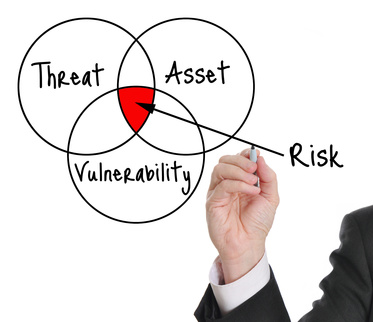 Let’s face it – taking a risk now and again can add a bit of spice to life. How else to explain hang-gliding or road-side sushi stands? On the other hand, keeping one’s family and fortune safe from risk is on the list of “lifetime goals” for most people. Estate planning is all about protecting your family and your hard-earned assets by reducing potential risk. A properly prepared and maintained estate plan will greatly reduce the risk that the inheritance you leave to your beneficiaries will be lost to their ‘creditors and predators’. Events that threaten assets and inheritance can include lawsuits, bankruptcies, divorce, disability, failed businesses, friends with ‘get-rich-quick’ schemes, gold-digger boyfriends/girlfriends, and perhaps a beneficiary’s own bad judgment. Increasingly, potential beneficiaries who have substance abuse problems or gambling addictions are of concern to parents and other family members who are planning their estates. Many of these concerns can be addressed by creating an estate plan that includes asset protection and creditor protection for the inheritance you will leave to your family. Since no one knows what the future will bring, taking steps to protect your family and your estate from possible misfortunes that could occur long after you’re gone is just smart business.
August, 2018
© 2018 Samuel, Sayward & Baler LLC
Q: My daughter is going through a divorce and a friend told me that in Massachusetts my son-in-law is entitled to information about MY assets in connection with their divorce – can this possibly be true?
A: Believe it or not, it’s true. In Massachusetts, a divorcing spouse can subpoena the parents of his spouse for information about the size of their estate and the terms of their estate plan to learn about any inheritance his spouse may receive. This is due to the fact that Massachusetts divorce law requires that a judge consider the likelihood that a divorcing spouse will have the opportunity to acquire assets in the future when the judge is deciding how the marital assets of the couple should be divided between them.
The 1990 Massachusetts case which established the right of a divorcing spouse to discover information about the other spouse’s possible inheritance was the Vaughan case. If you are subpoenaed by your son-in-law’s attorney you may be required to submit a ‘Vaughan Affidavit’ which must include:
Although you do not have the legal right to refuse to comply with a subpoena requesting this information, you certainly have the right to create an estate plan which provides protection for your child’s inheritance from the claims of creditors such as a divorcing spouse, a failed business, a bankruptcy, or other lawsuits.
If you are concerned about the vulnerability of your estate to your children’s creditors, including a divorcing spouse, make an appointment to meet with one of our attorneys to discuss the steps you can take to protect your children’s inheritance.
July, 2018
© 2018 Samuel, Sayward & Baler LLC
Clients often ask how often they should review and update their estate plan. Here’s a quick reference guide of when you should call us to schedule a time to review your estate plan:
The above list is not meant to be exhaustive as everyone’s situation is unique. If you are wondering if it’s time to come in for an update, it probably is. Call Jennifer Poles at our office to schedule an appointment with one of our attorneys to see if any updates are necessary.
July, 2018
© 2018 Samuel, Sayward & Baler LLC

Some of the most frequent questions I hear from clients in my estate planning law practice have to do with whether they should create an irrevocable trust. Here are five questions to ask when deciding whether or not an irrevocable trust would be a good addition to your estate planning strategy.
As with all estate planning, whether or not a particular type of trust or other planning is right for you depends entirely on your unique situation. Speak with an experienced estate planning attorney, a lawyer for wills and trusts, about your situation and your goals and don’t forget to ask the above five questions.
Attorney Suzanne R. Sayward is a partner with the Dedham firm of Samuel, Sayward & Baler LLC which focuses on advising its clients in the areas of estate planning, estate settlement and elder law matters. She is certified as an Elder Law Attorney by the National Elder Law Foundation, a private organization whose standards for certification are not regulated by the Commonwealth of Massachusetts. This article is not intended to provide legal advice or create or imply an attorney-client relationship. No information contained herein is a substitute for a personal consultation with an attorney. For more information visit www.ssbllc.com or call 781/461-1020.
July, 2018
© 2018 Samuel, Sayward & Baler LLC

Regardless of whether you agree or disagree with the decision to cancel the Roseanne show following Roseann Barr’s racist tweet of last month, I think everyone can agree that her failure to be thoughtful about her actions led to her downfall and the downfall of her very successful show. While there may be debate about the appropriateness of the punishment Roseanne received (too harsh? too light?), most people feel badly for Roseanne’s co-workers who will pay the price for her bad behavior by losing their jobs. They are no doubt angry and feel betrayed by her. The same is true when it comes to estate planning strategies; we betray the ones we care about when fail to follow estate planning basics. Failure to act thoughtfully with respect to your estate plan can leave the people you love feeling angry and betrayed too.
In many ways, creating an estate plan is not something you do for yourself; it is something you do for the people you love. Setting up wills, trusts and estate plans are crucial for your legacy. If you become incapacitated because of an accident, a stroke or an illness and you have not created a Durable Power of Attorney and a Health Care Proxy, your family is going to have a difficult time helping you. Without these basic estate planning documents no one, not even your spouse, has the legal authority to gain access to your assets or to make decisions about your care. One or more family members may need to go to court to be appointed as your conservator and/or guardian so that bills can be paid, investments can be managed and proper care can be arranged. This will cause your family members stress and take hours of their valuable time to do things that could have been avoided with some advance planning.
Likewise, if you die without a Will, it will be more difficult and expensive for your family to settle your estate. Even worse, your estate may not be distributed in the way you thought it would or how you wanted. These unintended consequences can leave bad feelings among survivors that can last for years. Proper estate planning could also be considered good inheritance planning. It is not uncommon for clients to tell me how their parents failed to do any planning and as a result the house was lost to long-term care costs, or a second spouse ended up with the treasured family cottage, or there were tens of thousands of estate taxes payable that could have been avoided with a little bit of advance estate planning.
In my experience, no one wants to leave their family with a mess of complex estate planning issues. Yet failing to act thoughtfully by creating an estate plan and keeping it updated often means a mess is what is left. Roseanne’s action hurt many people – people she had no intention of hurting. Don’t let failing to plan leave your loved ones with the bad feelings that unintended consequences so often produce –and of course, think before you tweet!
June, 2018
© 2018 Samuel, Sayward & Baler LLC