Attorney Suzanne Sayward discusses George Clooney and Gifting and the tax implications, for our Smart Counsel for Lunch Series. Please watch and if you have any questions or want to learn more please call us at 781 461-1020.
To our Clients and Friends:
Do you have children that are planning to go to college in the next year or two? Do you want to help your child find the best college for them? Are you worried about having everything in place for them when they leave home for the first time? If you answer yes to any of these questions, then please join us for the next Zoom webinar in our Smart Counsel Series on Thursday, January 21, 2021, from 6:00 pm to 7:30 pm, to learn how to find the right fit in a college for your child.
Larry Dannenberg, founder of College Solutions, along with his colleague Aaron Ladd, Managing Director for the Northeast, will discuss how to identify the ideal college from an academic, social and financial perspective — not only for students who are at the top of their class, but also for students who are in the mainstream academically, have learning disabilities, or may possess special athletic skills. Significant changes have occurred in the college admission process in the last year due to the Coronavirus (COVID-19) pandemic. Standardized testing has shifted, timing for financial aid has accelerated, and researching and visiting colleges has become very complicated. Join us to learn why starting the process early can offer significant advantages.
Additionally, Attorney Abigail Poole of Samuel, Sayward & Baler, LLC will discuss the importance of having your child execute a health care proxy, power of attorney and HIPAA Authorization upon reaching the age of 18. This has always an important measure for your child to have in place, but it has become far more critical since the onset of the Coronavirus.
Contact Lynne Abe at 781/461-1020 or abe@ssbllc.com to reserve a spot for you and a friend. (Please forward this message to a friend or family member if they have children who plan to attend college.)
The program is free but space is limited so don’t delay!
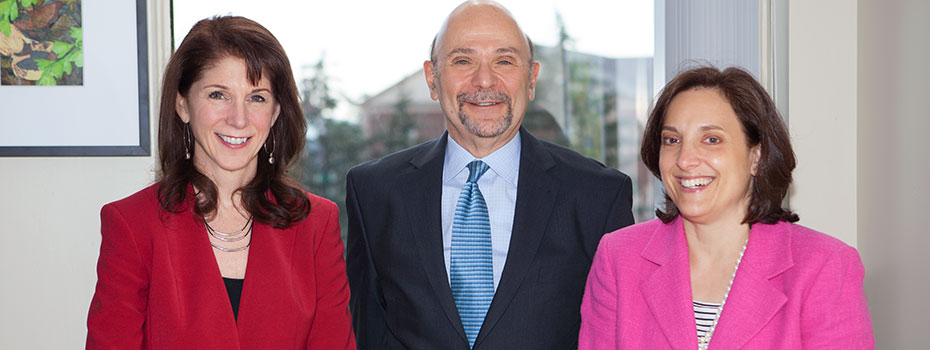
Suzanne R. Sayward
Maria C. Baler
Abigail Poole
Email abe@ssbllc.com to register
Looking ahead to this year’s resolutions, here are five estate planning resolutions that the COVID-19 pandemic has shown us to be more important than ever.
Most of the clients I meet who do not have a Will, Power of Attorney or other estate plan documents know they should have them, they have just put off this task – sometimes for much longer than they should, especially when faced with a global pandemic. I met many people in 2020 who had put off estate planning and were suddenly in a panic to get it done given what was happening all around them. If you are similarly situated, make it one of your goals for 2021 to get an estate plan in place. A simple plan (Will, Power of Attorney, Health Care documents) is better than nothing at all. If you have young children or assets in excess of $1 million, a Trust may be advisable to meet your planning goals. An experienced attorney who prepares Wills and Trusts as the primary focus of their practice will give you options and let you decide which plan is best for you at the moment.
If you already have an estate plan in place (good job!) resolve to review it this year to make sure the provisions of your plan still reflect your wishes. If it has been more than five years since the documents were signed or you have had changes in your personal or financial situation, meet with an estate planning attorney (virtually of course!) to identify any changes that should be made.
The advice of an experienced attorney is not cheap and estate planning attorneys are no exception. However, making sure decisions can be made for you if you are ill, making sure your assets go where you want them to go at your death, managing inherited assets properly for young beneficiaries, protecting assets for your family, avoiding probate and saving your beneficiaries as much income and estate tax as possible are important goals. The way your estate plan is carried out will have a significant financial and emotional impact – positive or negative – on you and your family. When something is this important, make sure it’s done right. The temptation to draft your own Will or other legal documents is there and is frankly a poor planning option. In my 33 years of practice, I have yet to see a Will drafted by a client that will accomplish what the client thinks it will. In fact, most self-drafted Wills create more problems than they solve. Proper estate planning is not something that can be done cost-effectively on your own. Seek the advice of an experienced estate planning attorney, not a general practitioner who prepares Wills along with divorce and personal injury law. Get it done right, and you will have the peace of mind that crossing this task off your list will bring.
Many of your most significant assets – life insurance, retirement accounts, annuities – will be paid to a designated beneficiary at your death. Properly designating those beneficiaries is more complicated than it may appear, and understanding the implications of certain beneficiary designations is crucial. Designating a trust as beneficiary for the benefit of a young or disabled beneficiary can be instrumental in avoiding a lengthy and costly court proceeding to appoint a guardian, or avoiding the loss of public benefits a disabled beneficiary may be receiving. Understanding how distributions from retirement accounts work after the death of the account owner, and how different beneficiary designations will impact the income tax payable on those distributions is critical to making appropriate designations, and is something that changed significantly when the SECURE Act became law on January 1, 2020. Ensuring your beneficiary designations are consistent with your overall estate plan is vital to accomplishing your estate planning goals.
Much of the estate planning you do is for the benefit of your family or other heirs and will never impact you. Creating health care documents that reflect your wishes is one area of estate planning that will directly and significantly impact you if you experience a period of illness prior to death. This has never been more apparent than this past year, when so many people became incapacitated, and so quickly, by the COVID-19 virus. Designating Health Care Agents to make health care decisions for you if you are unable to do so, making sure the people you want to be able to get information from your physicians can do so and will not be obstructed by privacy laws, and determining your care preferences and communicating them to your Health Care Agents and physicians are all crucial to making sure your health care wishes are carried out. In Massachusetts, the legal document that we use to make sure these things happen are Health Care Proxies, HIPAA Authorizations and Living Wills. The person you name to make health care decisions for you is called your Health Care Agent. These documents are all part of a complete estate plan, and arguably the most important part from your perspective.
Estate Planning is important for anyone over the age of 18. College-age children and elderly parents should have Durable Powers of Attorney and health care documents that will allow someone to make financial and health care decisions for them, and have access to information if they are ill or incapacitated. This year underscored this need, as some college students fell ill far from home, and elderly parents were too sick to make decisions regarding their own care. Parents of young children should name guardians for their children and create a trust to manage assets for young beneficiaries to avoid a child receiving control of an inheritance at age 18. Parents who will leave a significant inheritance to their children should consider asset protection planning to protect inherited assets from a child’s creditors, divorcing spouse, etc. Older couples or others with large estates can save their heirs significant estate taxes in Massachusetts with proper planning. Elderly parents may want to plan to protect assets from long-term care liability.
Now that 2020 is behind us and a COVID vaccine is here, we look back on 2020 grateful that we were able to continue to do our work, happy to be able to provide some peace of mind to our clients in these uncertain times, and hopeful that there are better days ahead. For those of you who are fortunate enough to be alive and well in these challenging times, we recommend you take these resolutions to heart, and create or update your estate plan today. If a friend or family member needs some inspiration to make estate planning a 2021 resolution, share this article with them. Wishing you a Happy and Healthy New Year!
Maria Baler, Esq. is an estate planning and elder law attorney and partner at Samuel, Sayward & Baler LLC, a law firm based in Dedham. She is also a former director of the Massachusetts Chapter of the National Academy of Elder Law Attorneys (MassNAELA), and the current President of the Board of Directors of the Massachusetts Forum of Estate Planning Attorneys. For more information, visit www.ssbllc.com or call (781) 461-1020. This article is not intended to provide legal advice or create or imply an attorney-client relationship. No information contained herein is a substitute for a personal consultation with an attorney.
January, 2021
© 2021 Samuel, Sayward & Baler LLC
The Staff of Samuel, Sayward & Baler LLC with Holiday Wishes on this Episode of Smart Counsel for Lunch
If you look up the definition of Legacy in the dictionary, it has two distinct meanings. The first is a gift by Will, especially of money or other personal property (e.g. “Her aunt left her a legacy of $50,000”). The second is something transmitted by or received from an ancestor (e.g. “He left a legacy of love and caring”). Both of these meanings are common in the estate planning arena. Clients often plan to leave money, real estate, jewelry, artwork, etc. to family or friends, and most people want to leave their families with fond memories and treasured traditions or customs.
However, legacies of the second type can also cut the other way. That is, rather than good will and fond memories, loved ones are left with feelings of anger and resentment. Often this type of legacy comes from poor estate planning or no estate planning.
Read on for 5 ways to leave a legacy of pain that lasts long after you’re gone.
1. Naming co-fiduciaries who cannot work together. A vital aspect of every estate plan is designating fiduciaries to carry out your wishes. In a Will, this is your Personal Representative, in a Trust it is the Trustee, and in a Power of Attorney it is your Attorney-in-fact. These positions can be held by one person or by two or more people. Sometimes clients feel that it is important to appoint all of their children to these roles because they don’t want to hurt anyone’s feelings by leaving them out. If your children do not get along or if they cannot work well together, naming them as co-fiduciaries is not going to heal that relationship and will probably make it worse.
2. Naming fiduciaries who are not qualified to carry out the job. For most people it is not necessary to appoint a professional such as an estate planning attorney or a bank as Personal Representative of their Will or Trustee of their Trust. However, it is important to appoint someone who is conscientious, responsible and competent to carry out the tasks of settling the estate in a timely manner. These tasks often include updating bank and other financial accounts, gathering and organizing financial statements, making numerous phone calls to insurance companies and IRA custodians, cleaning out the house and readying it for sale, and working with professionals like attorneys and accountants, to name a few. If the person you are considering naming as a fiduciary does not do a good job managing her personal matters, chances are she is not going to do a good job performing these tasks for you or your estate.
3. Treating children differently. If you have more than one child, consider carefully the possible consequences of treating them differently in your estate plan. By that I mean leaving one child a greater portion of your assets and estate than another child, or directing that one child’s inheritance be distributed outright to her while another child’s share remains in trust to be managed for him. There are certainly compelling reasons to treat children differently in your estate, such as when you have a child who receives needs-based governmental benefits, a child who struggles with drug dependency, or a child with disabilities that impair her ability to manage assets. However, if there is not a compelling reason for treating a child differently than his siblings, doing so is likely to leave the child who is singled out feeling angry and resentful, and that anger is often directed at his siblings since mom and dad are no longer around. In my practice I have seen this result in a total breakdown of sibling relationships which extended into the next generation.
4. Not being clear about your wishes for your tangible personal property. If you’re a fan of the TV series Fargo, then you will recall how distribution of a parent’s tangible personal property in a manner that feels ‘unfair’ can create trouble (Season 3). Tangible personal property consists of items such as a car, jewelry, artwork, tools, collections/collectibles, etc. In Fargo, one brother received a valuable stamp collection and the other a Corvette. Sadly, many people don’t need a television show to experience the impact of family discord over the distribution of tangible personal property because they have experienced it in their own families. If you have valuable artwork, items that have sentimental value to your children, jewelry, or other possessions that could be a source of controversy, designating the recipients of those items rather than leaving it up to your children to ‘figure it out’ will go a long way in ensuring family harmony.
5. Conveying conflicting messages to family. Whether or not to share the details of your estate plan or legacy planning with family members is a personal decision. For some families, a family meeting to inform everyone of decisions regarding who will serve as Personal Representative of the Will and the distribution provisions of the estate plan is the norm. For other families, no information is shared. I see problems arise when a parent shares information, such as who is named as Personal Representative or to whom certain assets will pass, and later changes those decisions without telling family members about the changes. In my experience, it is a good idea to inform the people you are naming as your fiduciaries (Personal Representative, Attorney-in-fact, Trustee, etc.) in case they are not willing or able to serve – better to find out sooner rather than later. In addition, your named fiduciaries should be provided with some basic information that will enable them to help in the event you become incapacitated or when you pass away. This should include contact information for your professional advisors (accountant, estate planning attorney, financial advisor) and the location of your important documents. While you need not provide your family with information about the value of your estate, maintaining a comprehensive list of your bank and investment accounts, insurance policies, retirement accounts, annuities (including copies of the contract), etc. and informing your fiduciary of the location of that information will go a long way toward the smooth settlement of your affairs.
If you want to leave a legacy of love and fond feelings, take care to consider how your estate planning, or lack of estate planning, may impact those you leave behind. If we our estate planning attorneys can help you with that legacy planning, please contact us – we’ll help you leave a legacy that will live on in the hearts and minds of your loved ones in a good way.
Attorney Suzanne R. Sayward is a partner with the Dedham law firm of Samuel, Sayward & Baler LLC which focuses on advising its clients in the areas of estate planning, estate settlement and elder law matters. She is certified as an Elder Law Attorney by the National Elder Law Foundation, a private organization whose standards for certification are not regulated by the Commonwealth of Massachusetts. This article is not intended to provide legal advice or create or imply an attorney-client relationship. No information contained herein is a substitute for a personal consultation with an attorney. For more information visit our website at www.ssbllc.com or call 781/461-1020.
December, 2020
© 2020 Samuel, Sayward & Baler LLC
Attorney Abigail V. Poole discusses naming or changing a trustee in your trust, for our Smart Counsel for Lunch Series. Please watch and if you have any questions or want to learn more please call us at 781 461-1020.
Attorney Suzanne Sayward discusses Fiduciary Compensation. Please watch and if you have any questions or want to learn more please call us at 781 461-1020.
I am very proud to be selected by Super Lawyers once again this year.

Please note we only are only able to serve clients with legal matters pertaining to Massachusetts.
Samuel, Sayward & Baler LLC
858 Washington Street, Suite 202
Dedham, MA 02026
781-461-1020 (phone)
781-461-0916 (fax)
©2026 Samuel, Sayward & Baler LLP. All Rights Reserved. The information presented on this website should not be construed to provide legal advice, nor does it constitute the formation of an attorney/client relationship. Read the disclaimer.